
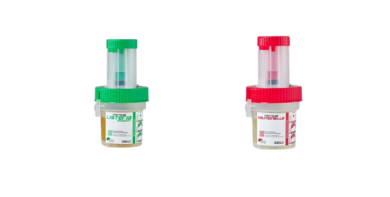
Allergen testing is the process of detecting and quantifying trace proteins from foods like peanuts, milk, or gluten in raw materials, production environments, and finished products, to confirm that labeling is accurate and that cross-contact hasn't introduced an undeclared allergen. For food manufacturers, it isn't a once-a-year compliance exercise — it's a control point that has to run continuously, from goods receiving through to the final batch release.
Undeclared allergens are consistently one of the leading causes of food recalls in both the US and EU. Most of these recalls don't come from a formulation mistake — they come from cross-contact: shared equipment, shared production lines, or a supplier ingredient change that didn't get communicated down the chain. That's why allergen testing sits alongside microbiological testing as a core part of a food safety plan, rather than something bolted on for label verification alone.
Why Allergen Control Is a Production Problem, Not Just a Labeling One
It's easy to think of allergens as a labeling issue — get the ingredient list right and you're covered. In practice, the bigger risk sits on the production floor. A shared conveyor, a poorly validated cleaning cycle between a peanut product and an allergen-free one, or airborne flour dust settling on an adjacent line can all introduce an allergen that never appears on the ingredient statement.
This means allergen testing has to happen at several points, not just at the end:
- Incoming raw materials — verifying supplier allergen declarations, especially for ingredients sourced from multiple facilities or countries
- Changeover and cleaning validation — swabbing equipment after a clean to confirm allergen residue is below the facility's action limit before starting an allergen-free run
- Environmental monitoring — checking dust, surfaces, and air handling systems in shared-line facilities
- Finished product verification — confirming the label matches what's actually in the package
Regulatory Requirements: US and EU
Allergen labeling law is one of the few areas of food regulation where the US and EU frameworks are structured quite similarly, though the details differ.
United States. The Food Allergen Labeling and Consumer Protection Act (FALCPA) of 2004 established eight major food allergens: milk, eggs, fish, crustacean shellfish, tree nuts, peanuts, wheat, and soybeans. Sesame was added as the ninth major allergen under the FASTER Act, effective January 1, 2023. Once a food is designated a major allergen under the FD&C Act, it triggers labeling disclosure requirements as well as cGMP and preventive controls obligations for allergen management at the facility level. The FDA issued its most recent Q&A guidance on food allergen labeling requirements in January 2025, replacing earlier draft and final guidance from 2022. Notably, the FDA has also flagged manufacturers deliberately adding sesame to products that didn't previously contain it, rather than controlling cross-contact — a workaround the agency has explicitly pushed back against in updated guidance. It's a reminder that "declared on the label" and "controlled in the process" are two different compliance obligations, and regulators are watching both.
European Union. Regulation (EU) No 1169/2011 requires the mandatory declaration of 14 allergens or allergen groups: cereals containing gluten, crustaceans, eggs, fish, peanuts, soybeans, milk, tree nuts, celery, mustard, sesame seeds, sulphur dioxide and sulphites above 10 mg/kg, lupin, and molluscs. Unlike the US threshold-free approach, several EU member states also apply "may contain" precautionary labeling guidance (VITAL-style thresholds), which pushes manufacturers toward quantitative testing rather than qualitative pass/fail results.
The practical takeaway for anyone exporting between the two markets: a testing and documentation program built only around the FDA's nine allergens will fall short in the EU, and vice versa. Multi-market manufacturers generally standardize on the wider 14-allergen EU list internally, even if a given product is only sold domestically.
Testing Methods: ELISA, Lateral Flow, and PCR
ELISA (Enzyme-Linked Immunosorbent Assay). This is the reference method most labs and regulators rely on for quantitative allergen results. ELISA kits use antibodies specific to the target allergen protein and report a concentration, typically in parts per million, rather than a simple yes/no. That quantitative output is what makes ELISA the method of choice for cleaning validation, supplier verification, and any situation where you need a defensible number for an audit trail — not just a positive or negative.
Lateral flow / rapid tests. These work on the same antibody principle as ELISA but are built for speed and simplicity — a swab or extract, a few drops on a test strip, a result in 5 to 10 minutes. They're qualitative rather than quantitative, which makes them well suited to line checks between production runs and changeover verification, where the question is simply "is this surface clean enough to start the next batch," not "exactly how many ppm remain."
PCR-based testing. Rather than detecting protein, PCR detects allergen-specific DNA. It's more common in raw material and ingredient verification — particularly for processed or highly refined ingredients where protein may have degraded but DNA fragments are still detectable — and in situations where species-level identification matters, such as confirming the presence of a specific tree nut.
| Method | Result type | Typical turnaround | Best used for |
|---|---|---|---|
| ELISA | Quantitative (ppm) | 20–90 minutes | Cleaning validation, supplier verification, regulatory documentation |
| Lateral flow | Qualitative (pass/fail) | 5–10 minutes | Line changeover checks, in-process screening |
| PCR | Qualitative/semi-quantitative (DNA-based) | 1–3 hours | Raw material verification, processed ingredients, species identification |
Building the Testing Program Into the Production Line
A workable allergen control program usually layers these methods rather than picking just one. Lateral flow tests give the production floor a fast go/no-go decision at changeover, without holding up the line waiting for lab results. ELISA runs in parallel on a sampling basis to generate the quantitative data auditors and customers actually ask for. PCR gets reserved for raw material qualification and the harder cases — refined oils, hydrolyzed proteins, or ingredients where the source species needs to be confirmed rather than assumed.
The equipment side matters as much as the kit chemistry. A microplate reader dedicated to ELISA workflows, consistent swabbing protocol and swab kits, and a documented sampling plan tied to your HACCP or food safety plan are what turn a testing method into an actual control point instead of a one-off check.
Choosing the Right Testing Setup
For most manufacturers, the decision isn't ELISA versus lateral flow — it's how to combine them for the risk profile of a specific line. A shared-line facility running both allergen-containing and allergen-free products on tight changeover schedules needs rapid lateral flow tests as the primary line-level control, with ELISA used for periodic verification and audit documentation. A facility with dedicated allergen-free lines can lean more heavily on ELISA for supplier and finished-product verification, since speed at changeover is less of a constraint.
Either way, the testing method has to match the decision it's supporting. A five-minute swab test tells you whether to start the next production run. A quantitative ELISA result tells you whether your cleaning SOP actually works. Both are allergen testing — they're just answering different questions.
If you need help selecting the right allergen testing method or equipment for your production line, our specialists are here to help. Get in touch, and we'll help you find the right fit for your facility.